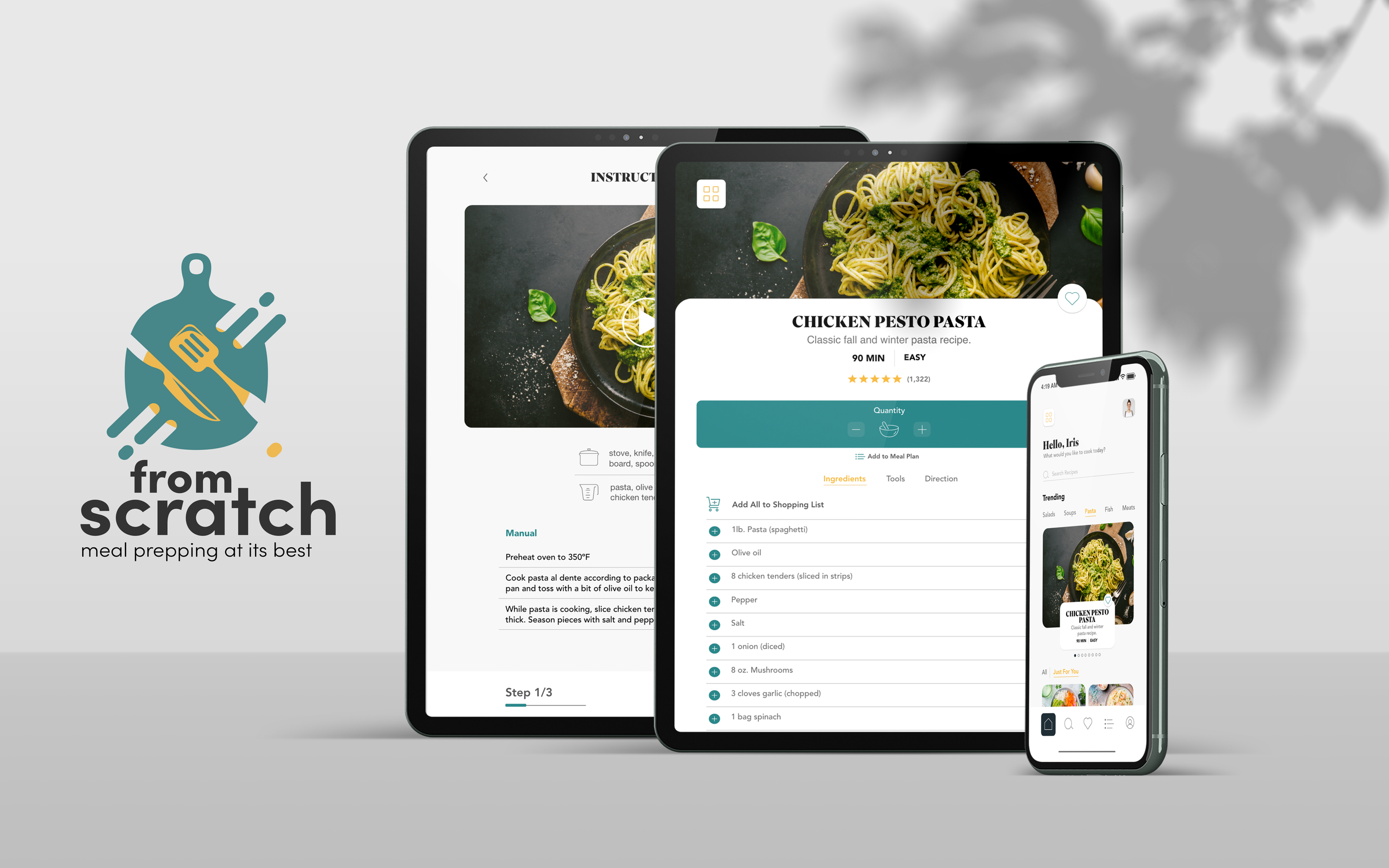
This project was completed as part of my UX Design Certificate (CareerFoundry, 2022) — training The Conservation Fund invested in to build my research and hypothesis-driven design skills as Creative Director. Defining a clear hypothesis and success metrics before building anything — rather than designing on instinct — became the exact framework I later applied leading The Conservation Fund's 2024 rebrand and website redesign, which started from a donor study rather than aesthetic preference.
Overview
Objective:
A responsive web app for recipes that meets the needs of its users and solves the problems they are facing with existing recipe apps.
Problem Statement:
The number of recipe products available on the web is astonishing. Just as more and more people are using digital rather than paper sources to stay up to date on news and sports, so too are people turning to the web for recipes rather than traditional recipe books. You can leave your laptop on the kitchen top when working through a list of instructions and browse recipes. On the other hand, the experience of finding recipes that work for you in different scenarios can be overwhelming. This app was designed to meet these needs and solve the problem users are currently facing.
TYPE
Recipe App
SKILLS APPLIED
UI, UX, Branding
SOFTWARE
Adobe XD, Illustrator, Photoshop
ROLE
UI/UX Designer, Prototyping





Reflection
What I've Learned
Defining a hypothesis and success metrics before designing anything changed how I thought about every decision that followed — every screen had to serve a measurable goal, not just look good.
Three personas with genuinely different motivations (a realtor, a working mother, a caregiver) made it clear how differently people define "an easy recipe."
What Would I Do Differently
Recruit a broader set of interview participants — all three personas skewed toward similar lifestyles, and a wider range might have surfaced different needs.
The discipline of defining success metrics up front — before a single screen was designed — is the habit I carried most directly into my work at The Conservation Fund. Just as this project measured success through visits, accounts created, and recipes saved, I approached the Conservation Fund's website redesign the same way: starting from what we needed to learn from donors, not from what looked good, and building toward outcomes we could actually measure.