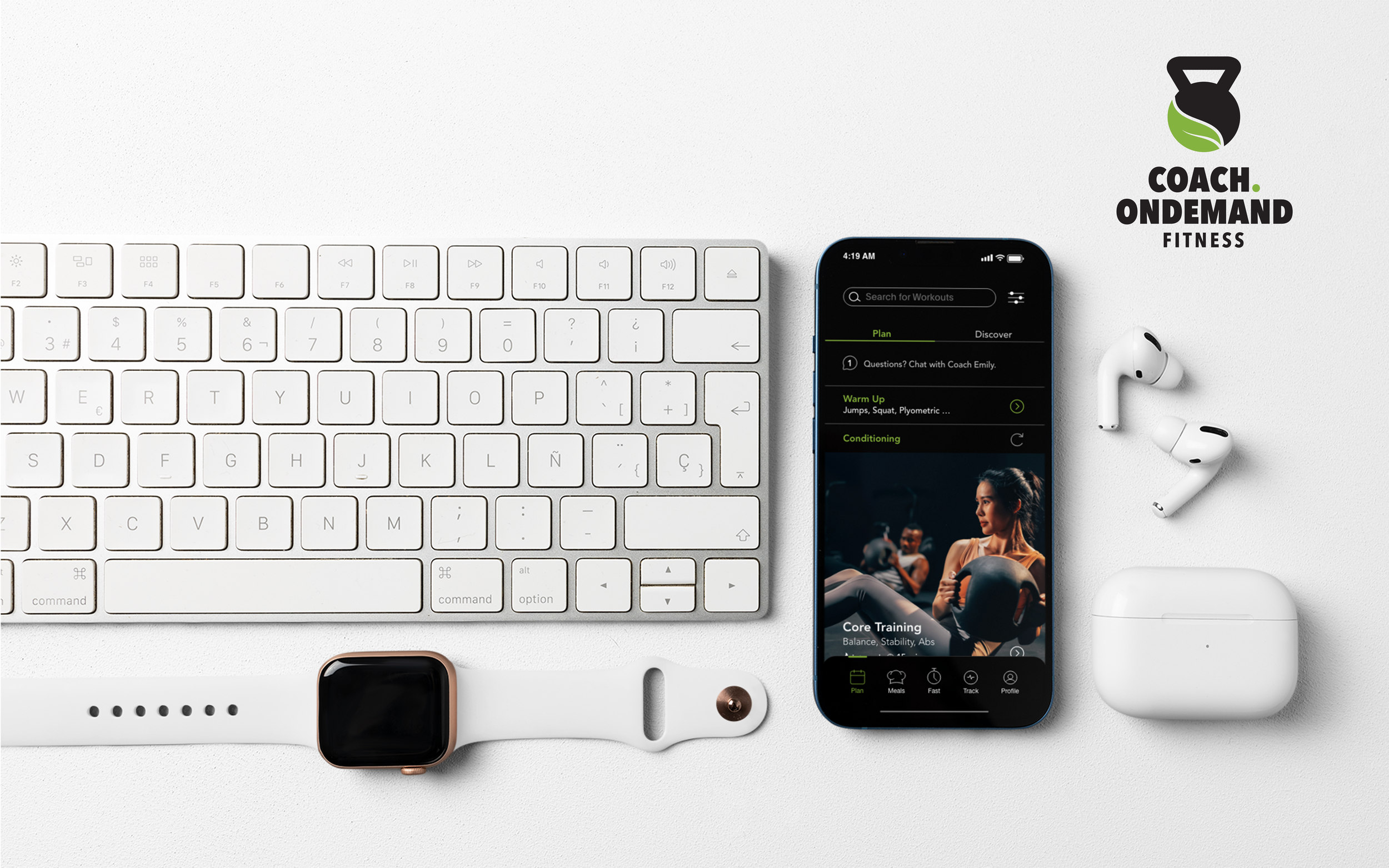
This project was completed as part of my UX Design Certificate (CareerFoundry, 2022) — training The Conservation Fund invested in to build my research and cross-platform design skills as Creative Director. Designing one coherent experience that still respected two distinct sets of platform conventions — iOS Human Interface Guidelines and Android Material Design — built the exact muscle I later needed leading the brand evolution: translating one brand into four distinct, audience-specific visual systems (B2C, B2B, B2P, B2I) that each needed to feel tailored while staying recognizably connected.
Overview
Objective:
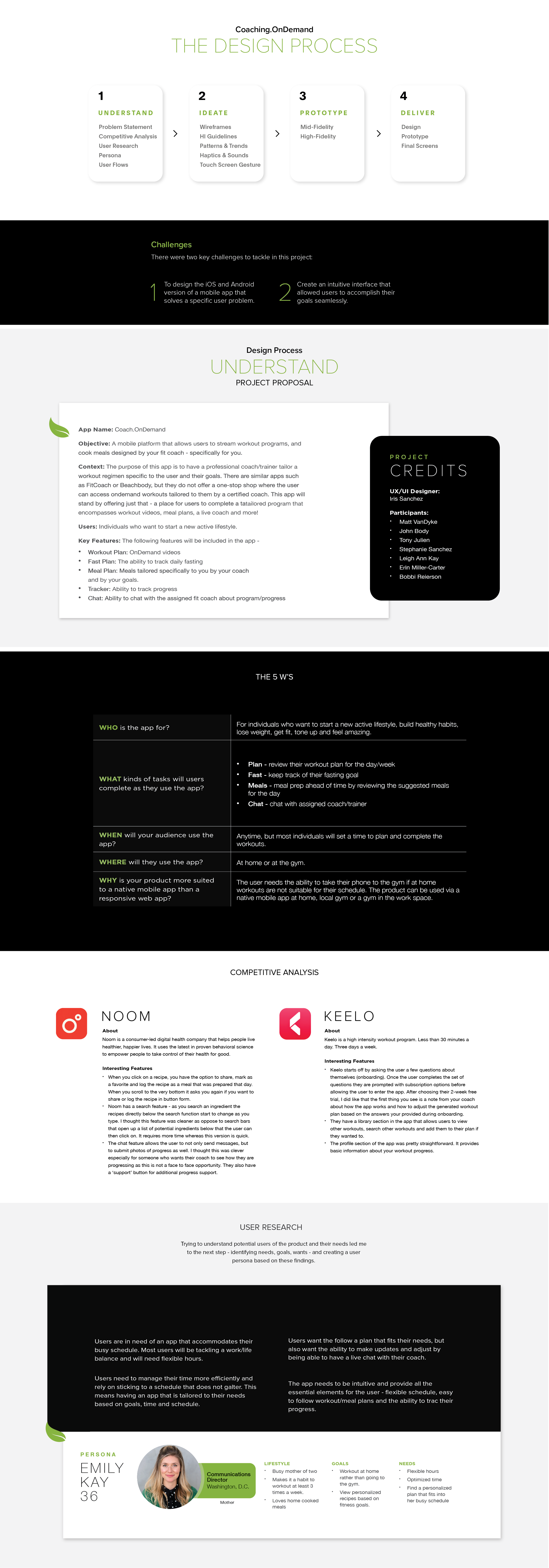
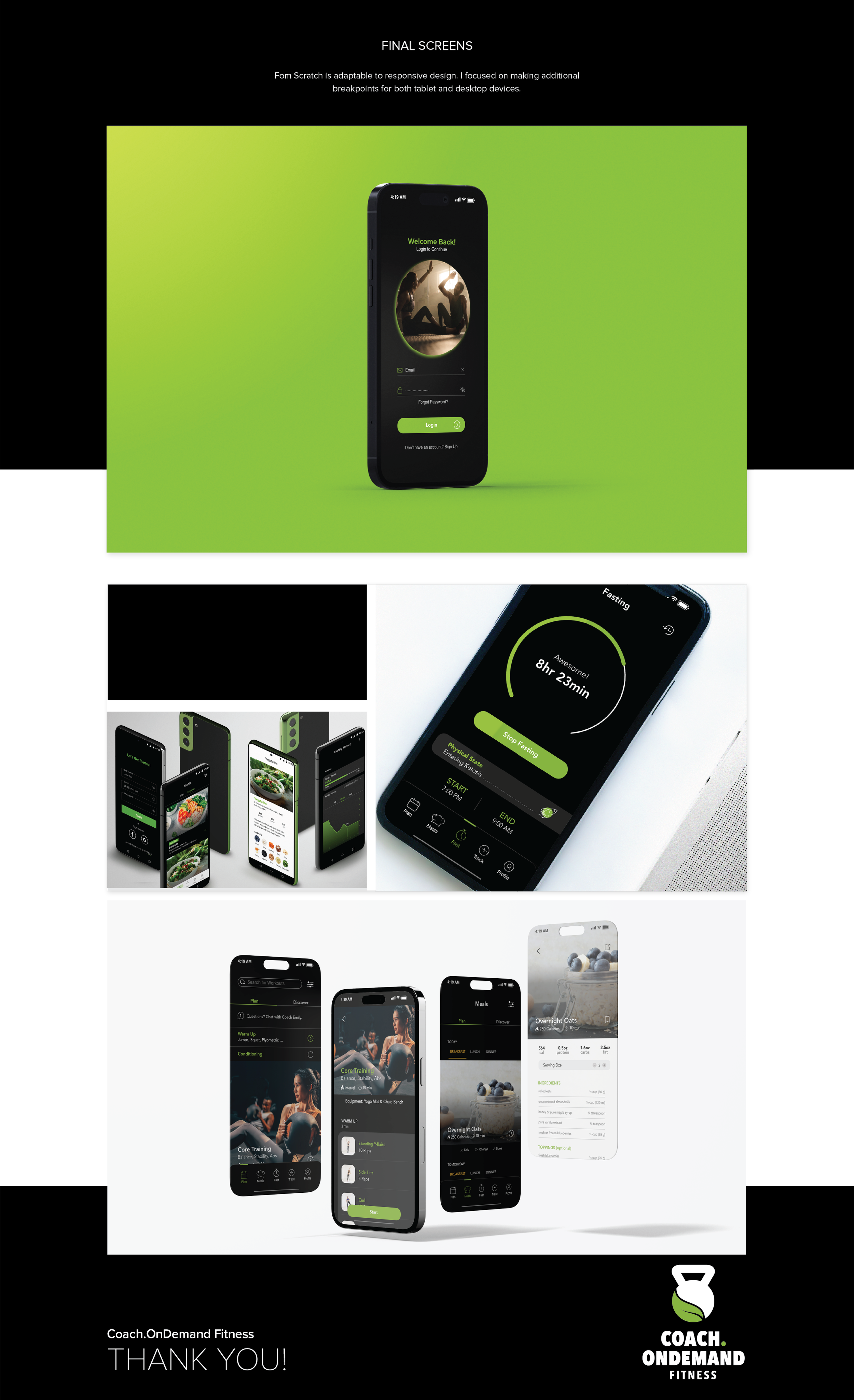
A mobile platform that allows users to stream workout programs, and cook meals designed by your fit coach - specifically for you.
Problem Statement:
The purpose of this app is to have a professional coach/trainer tailor a workout regimen specific to the user and their goals. There are similar apps such as FitCoach or Beachbody, but they do not offer a one-stop shop where the user can access ondemand workouts tailored to them by a certified coach. This app will stand by offering just that - a place for users to complete a tailored program that encompasses workout videos, meal plans, a live coach and more!
TYPE
Fitness App (iOS & Android)
SKILLS APPLIED
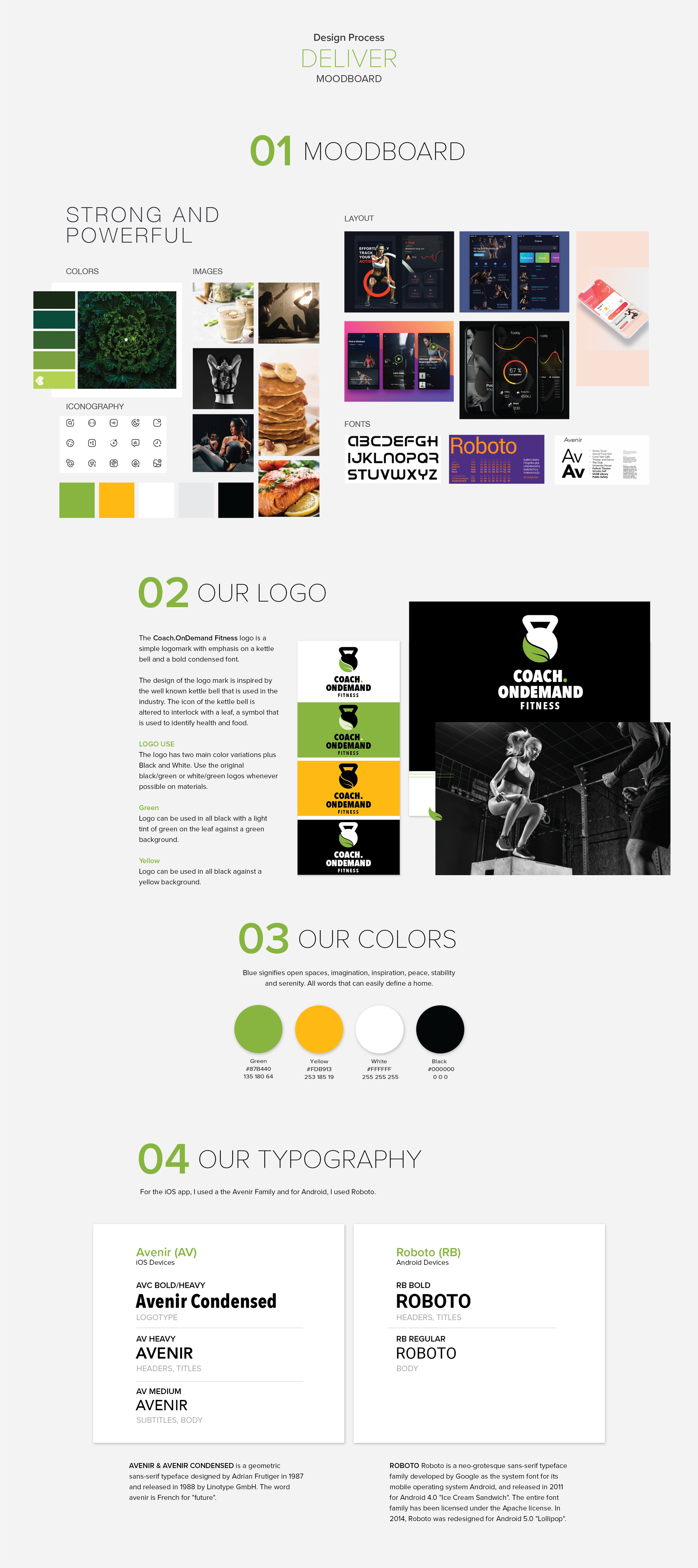
UX, UI, Branding
SOFTWARE
Adobe XD, Illustrator, Photoshop
ROLE
UX/UI Designer, Prototyping



Reflection
What I've Learned
Designing for iOS and Android side by side taught me that platform-native conventions aren't optional polish — they're part of what makes an interface feel trustworthy to its specific users.
Haptics and sound are part of the UI, not an afterthought — they shape how confident a user feels about an action before they even see the result.
What Would I Do Differently
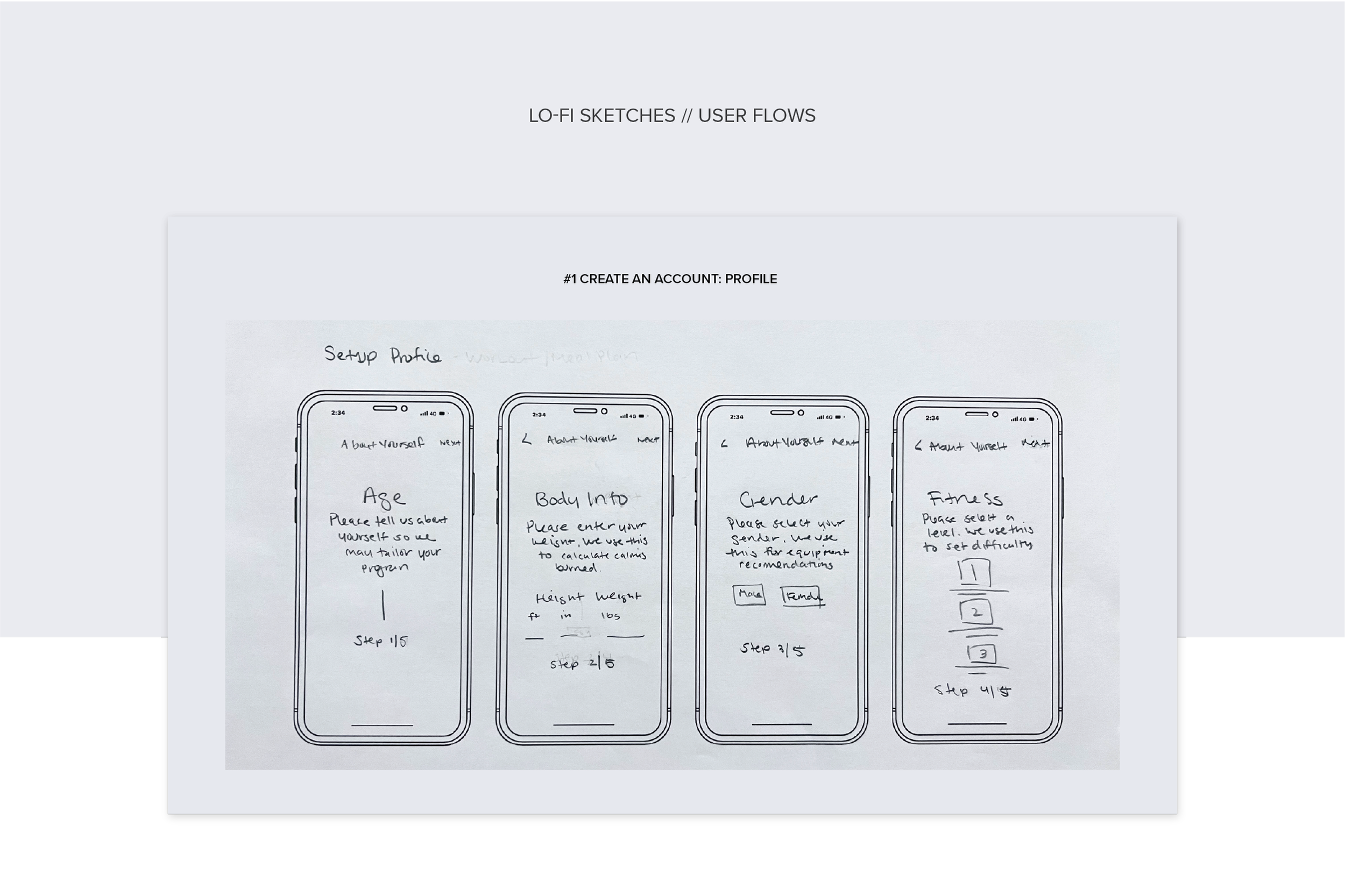
Test the onboarding flow with users unfamiliar with fitness apps specifically, since the persona and interviews skewed toward people already comfortable with the category.
Designing for iOS and Android side by side taught me that consistency doesn't mean sameness — it means every version stays true to the same core experience while adapting to what its specific context actually requires. That's the same principle behind the brand evolution: four audiences, one brand, each expression built for how that specific audience actually needs to encounter it.