The Conservation Fund
Creative Direction | Brand Transformation | Visual Storytelling
Project Overview
The Conservation Fund is a national nonprofit dedicated to protecting America's most important natural landscapes while advancing economic and community benefits — with a track record spanning all 50 states since 1985.
Despite that track record, the organization had spent over 20 years operating largely behind the scenes, with partner organizations often receiving public credit for conservation wins The Conservation Fund had made possible. The CEO set out to change that: to stop sitting on the sidelines and start being recognized as the driving force behind the outcomes it had quietly delivered for two decades.
As Creative Director, I led the organization's 2024 visual rebrand and oversaw the development of a more cohesive and recognizable identity system built to support that shift — from invisible enabler to recognized leader. The work extended across brand strategy, website redesign, annual reporting, photography, video storytelling, fundraising communications, and creative operations.
Beyond the visual transformation, I established creative processes and workflows that improved consistency, collaboration, and brand stewardship across the organization.
My Role
I provide strategic and creative leadership for the organization's brand and visual communications.
Responsibilities included:
Leading the 2024 rebrand initiative
Refining and implementing the visual identity system
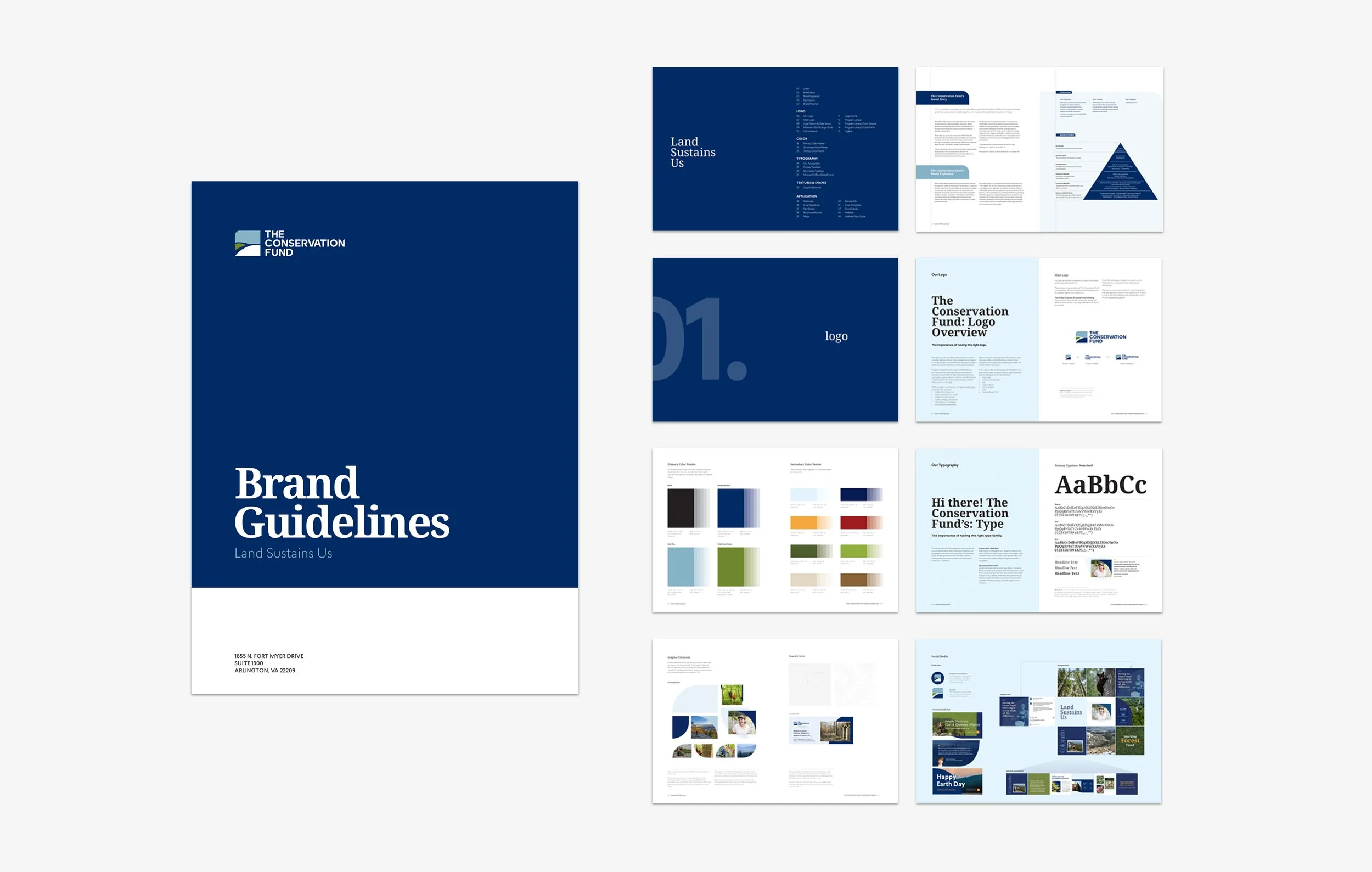
Developing brand guidelines and implementation standards
Directing photography and video storytelling initiatives
Overseeing the Annual Report and fundraising communications
Managing creative budgets exceeding $150K
Supervising internal creative staff and external vendors
Establishing project management and creative workflows
Creative Approach
The rebrand was driven by a need to establish a stronger and more recognizable visual identity for The Conservation Fund. The previous logo lacked a distinctive presence, creating an opportunity to develop a system that better reflected the organization's mission, impact, and long-term vision.
Working in collaboration with agency and contract partners, I shaped, refined, and ultimately finalized the identity system. I designed the resulting visual language to communicate conservation, stewardship, growth, and community while providing a scalable foundation for fundraising, storytelling, and public engagement.
The work extended beyond the logo to include typography, color systems, photography direction, website design, and brand standards that could be consistently applied across every organizational touchpoint.
Key Deliverables
Organizational rebrand
Logo and visual identity system
Brand guidelines and implementation standards
Website redesign and information architecture
Annual Report
Photography direction and asset development
Video storytelling initiatives
Fundraising and donor communications
Creative workflow development and project management systems
Rebrand
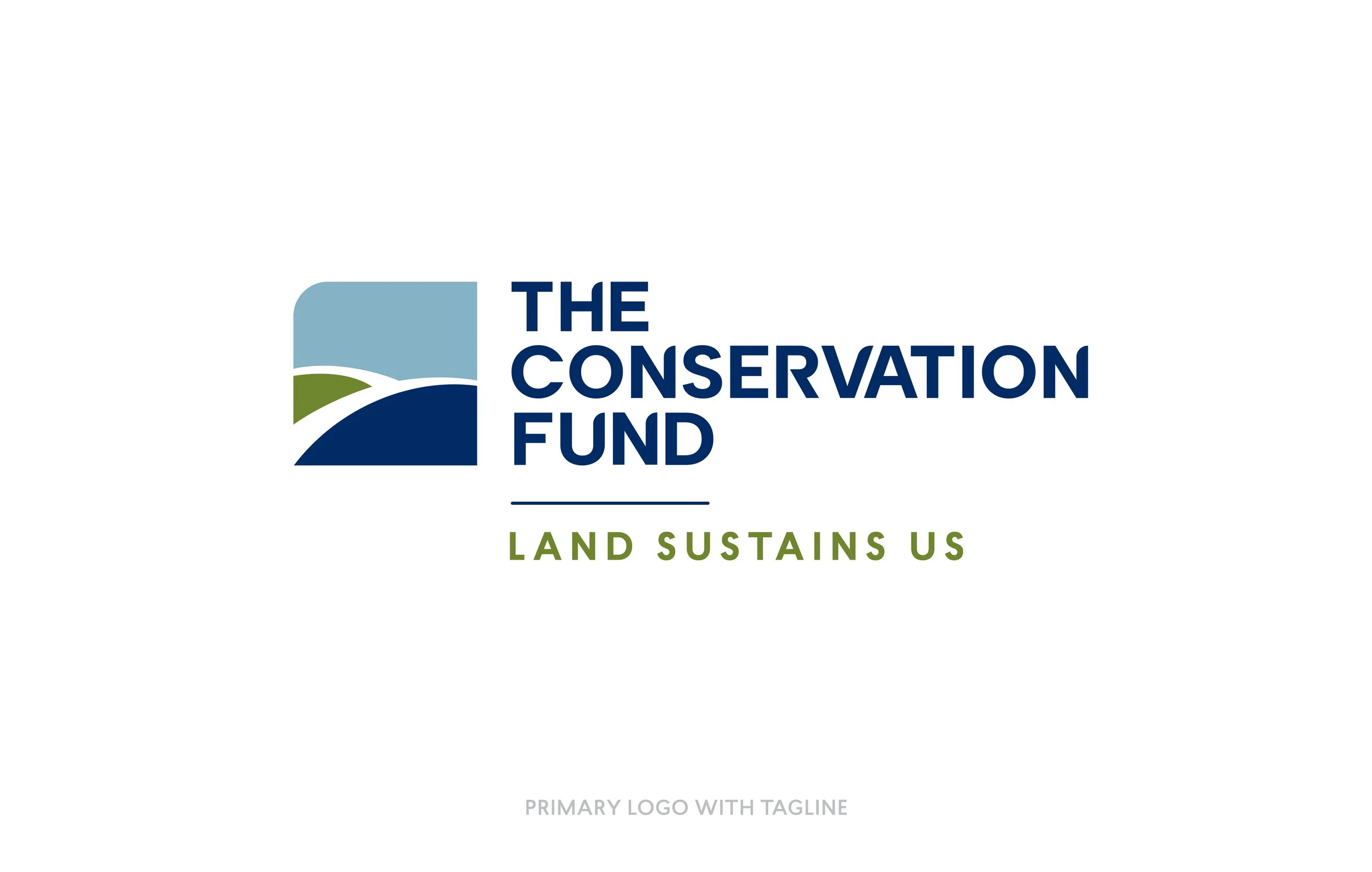
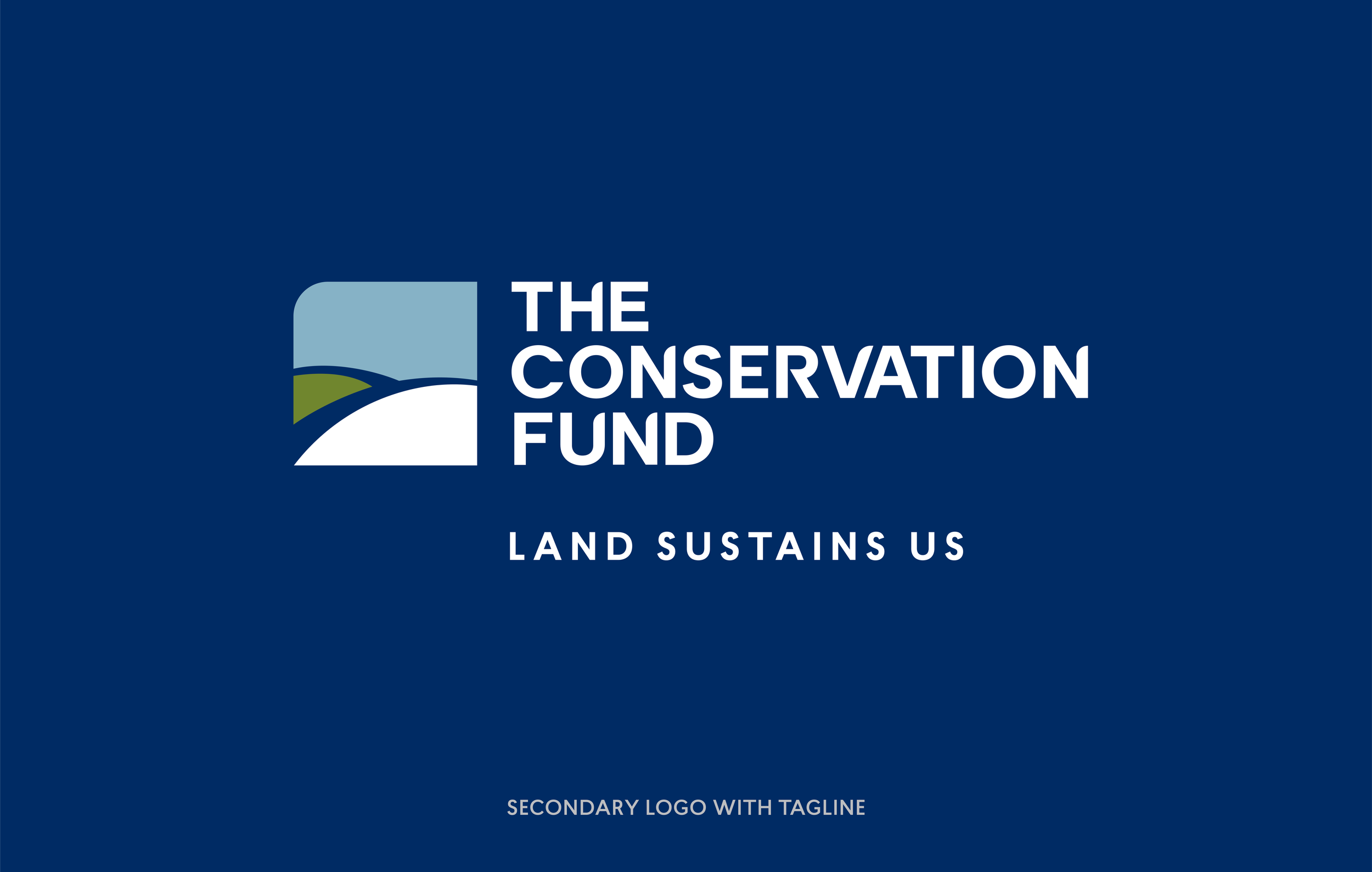
I built The Conservation Fund's new identity around the organization's brand positioning, Land Sustains Us.
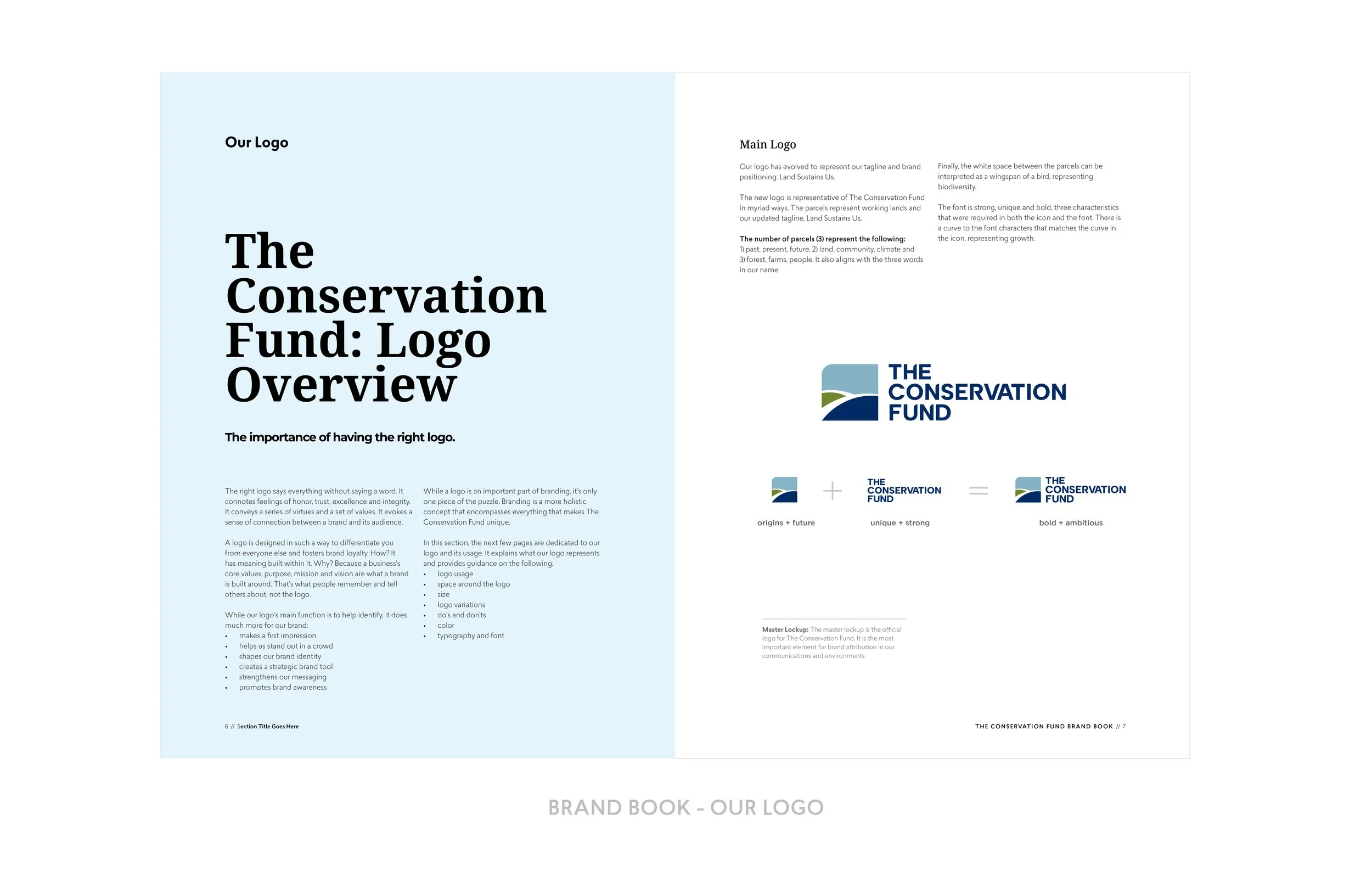
The logo features three interconnected land parcels representing multiple dimensions of the organization's mission, including land, community, and climate; forests, farms, and people; and the connection between past, present, and future. The negative space between the forms can also be interpreted as the wingspan of a bird, symbolizing biodiversity and conservation.
I led the refinement and implementation of the identity through typography selection, color palette development, brand standards, and organization-wide adoption across print and digital channels.
Website Transformation
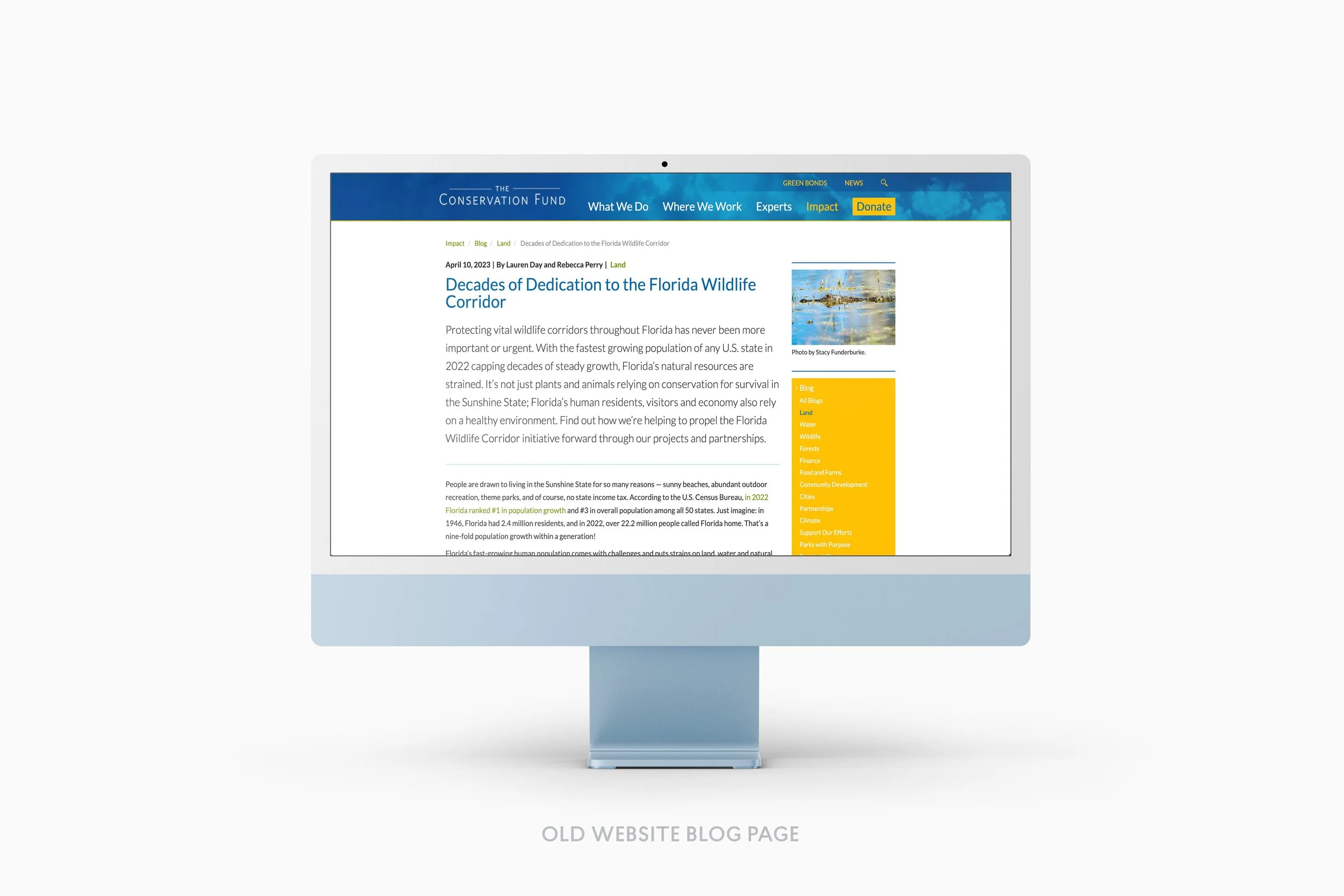
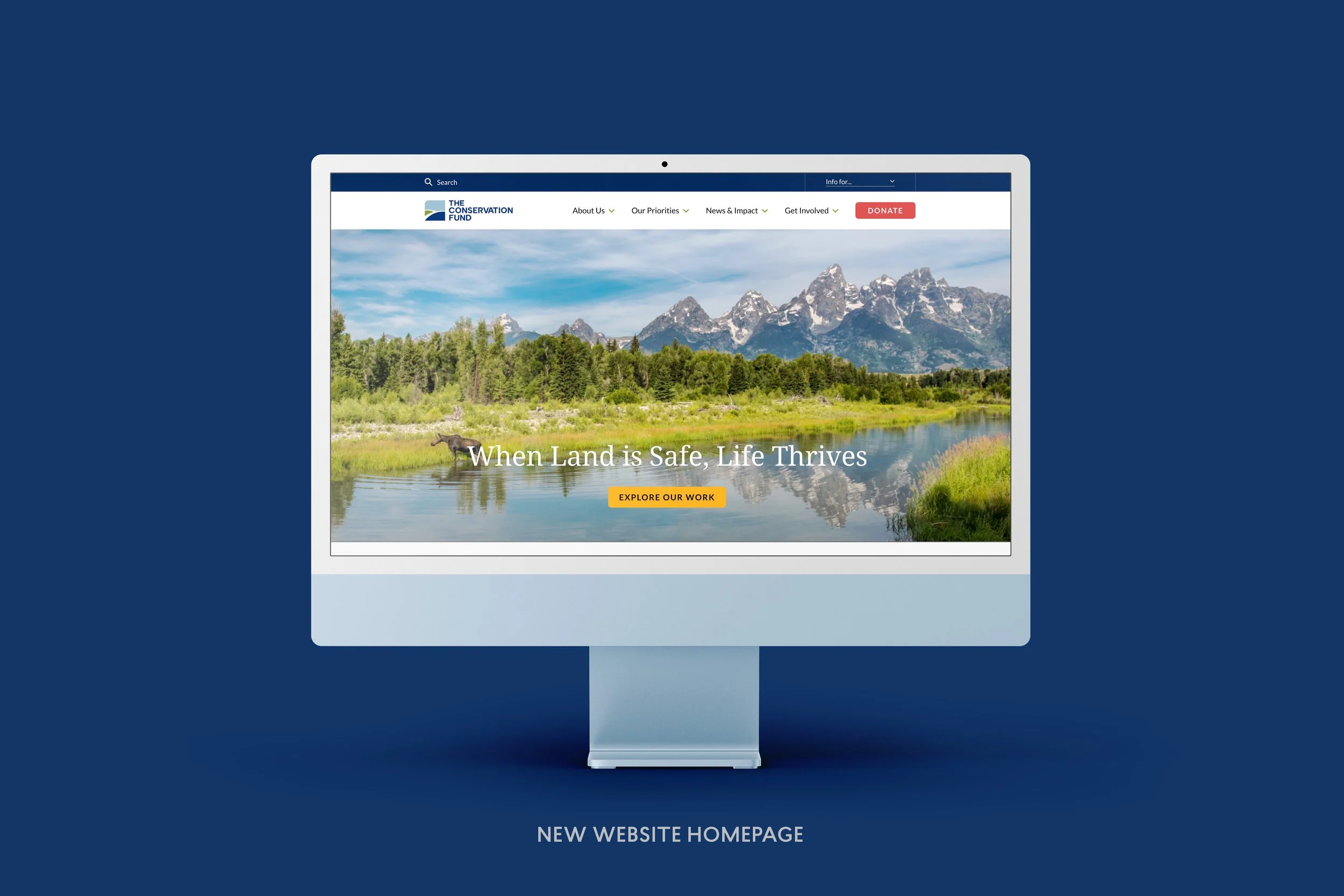
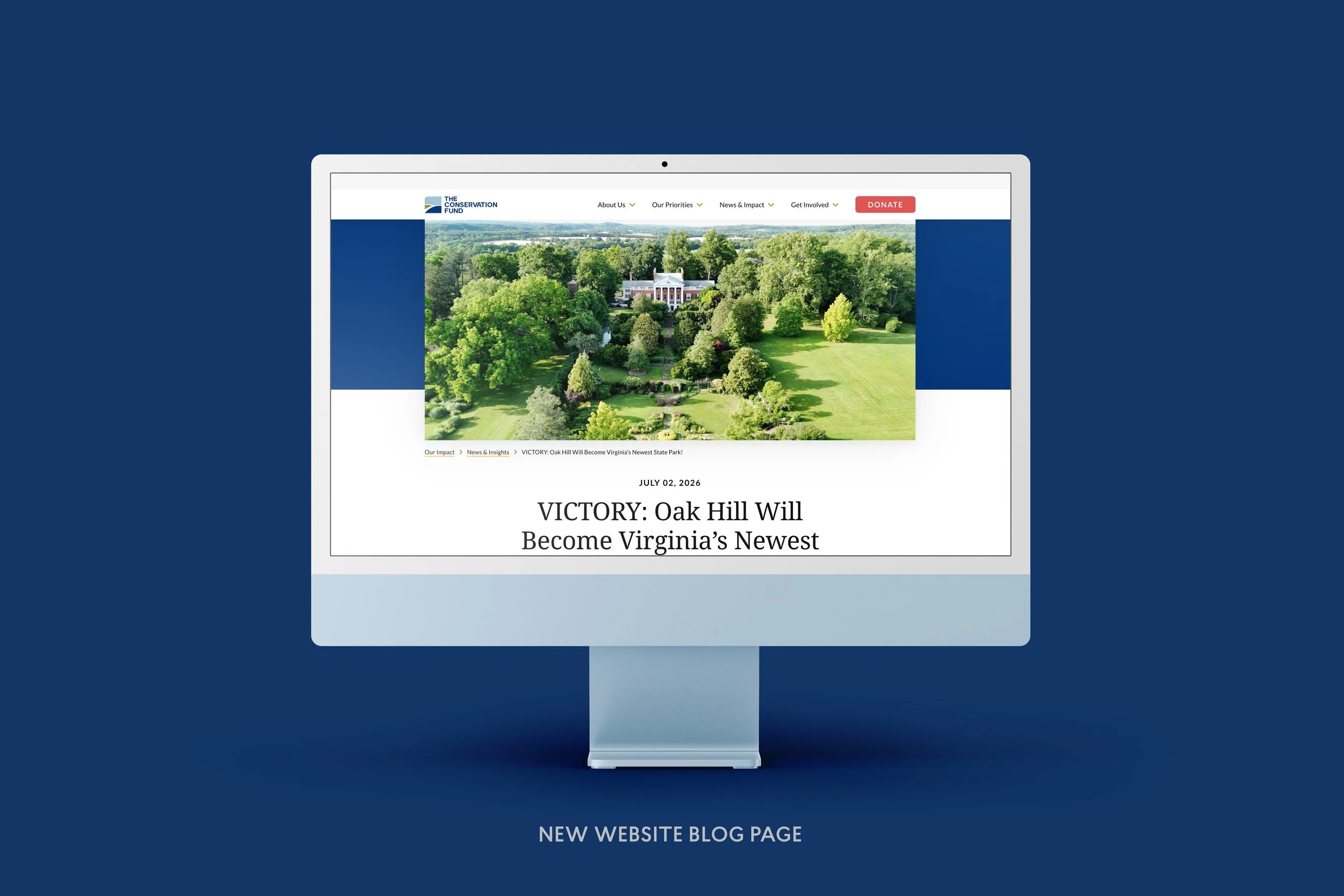
As part of the rebrand initiative, I completely redesigned and restructured the organization's website to improve navigation, storytelling, and user engagement, partnering with agency Blue State on the initial launch.
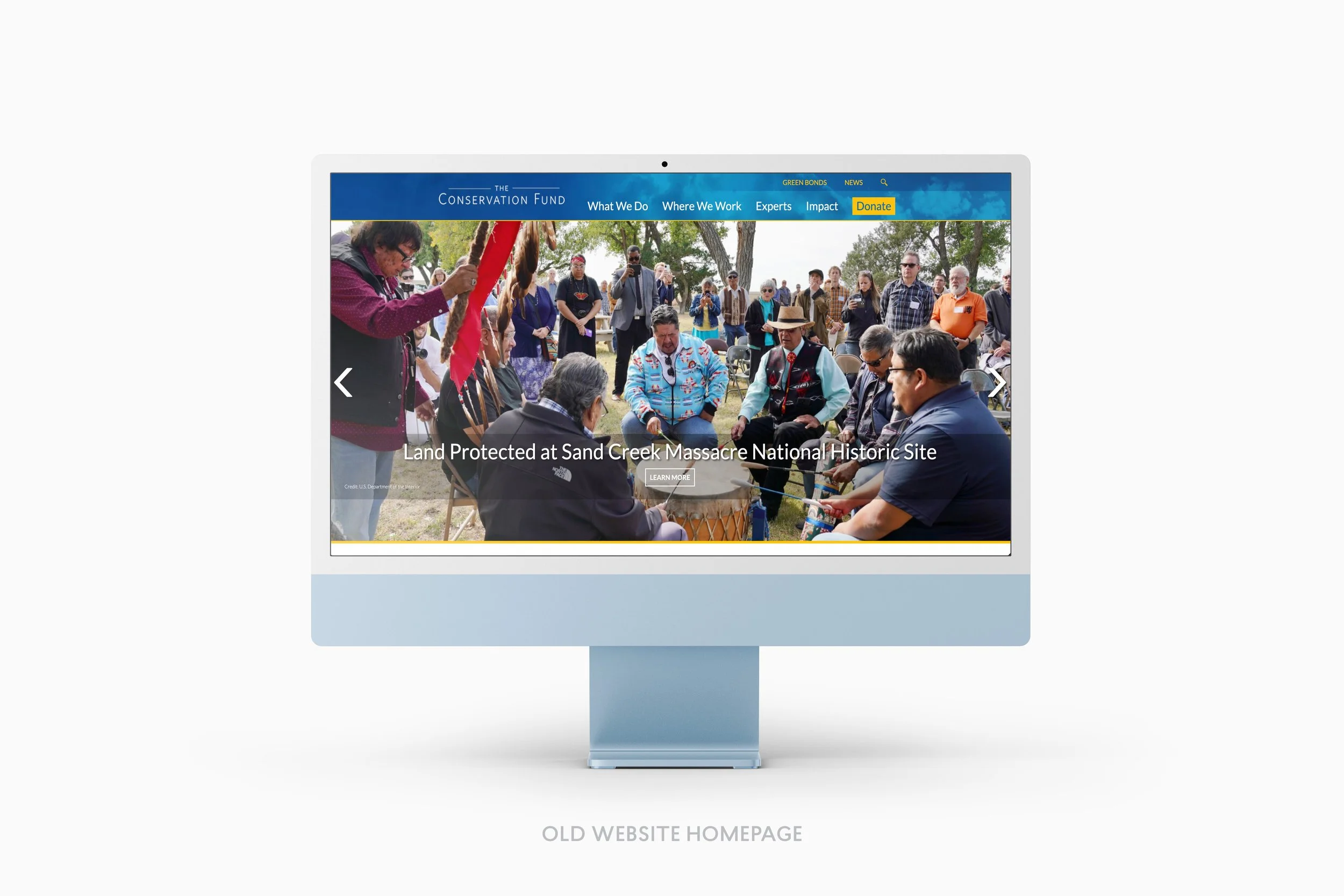
The old site had effectively functioned as an internal content library rather than a public-facing experience. I revisited the site's information architecture and extended the new visual identity across The Conservation Fund's primary public platform, rebuilding it to serve an actual external, donor- and public-facing audience rather than an internal one.
Following launch, I partnered with the Director of Marketing to further optimize the site for our B2C audience, using findings from a donor study to guide refinements to content, messaging, and user experience.
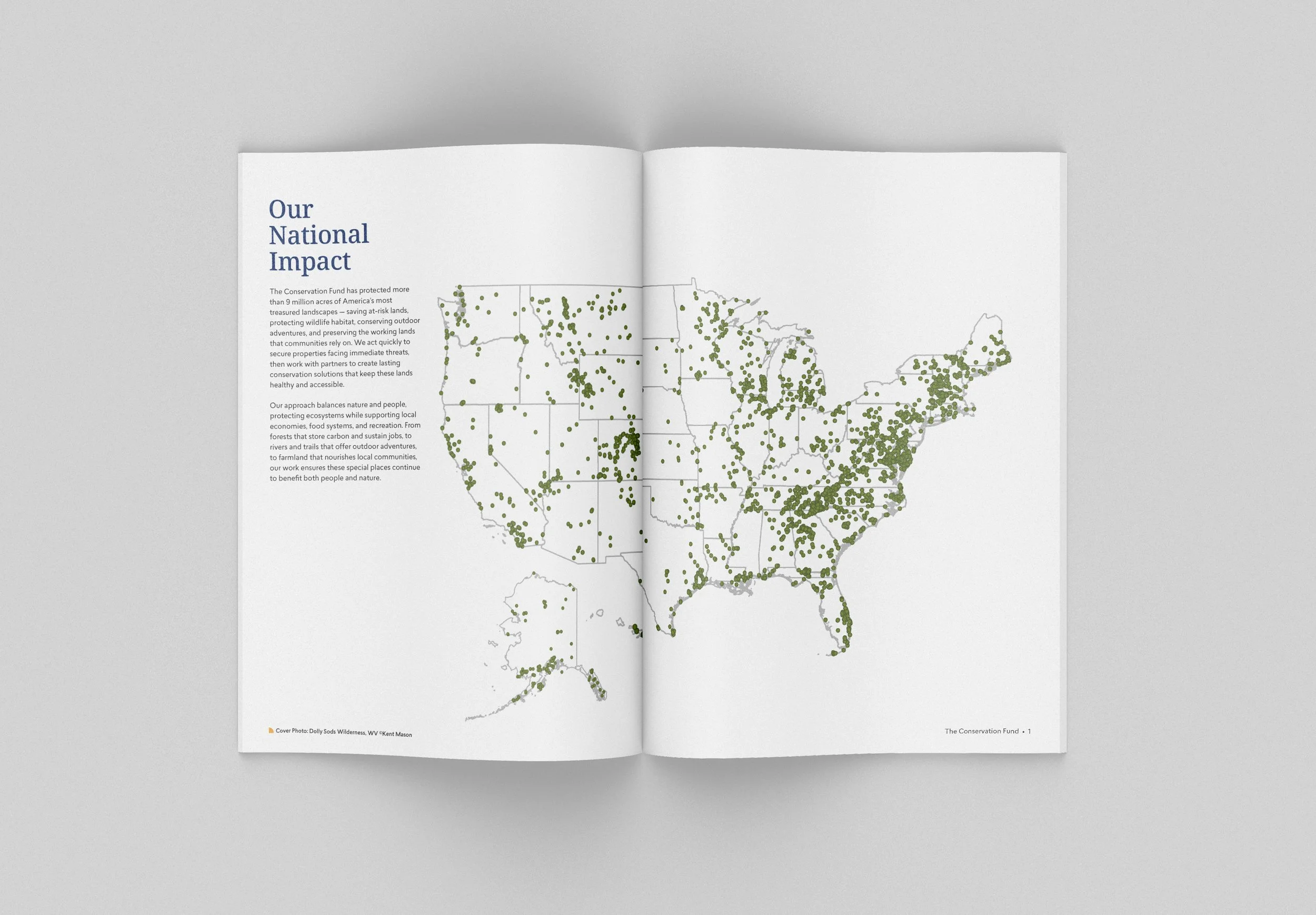
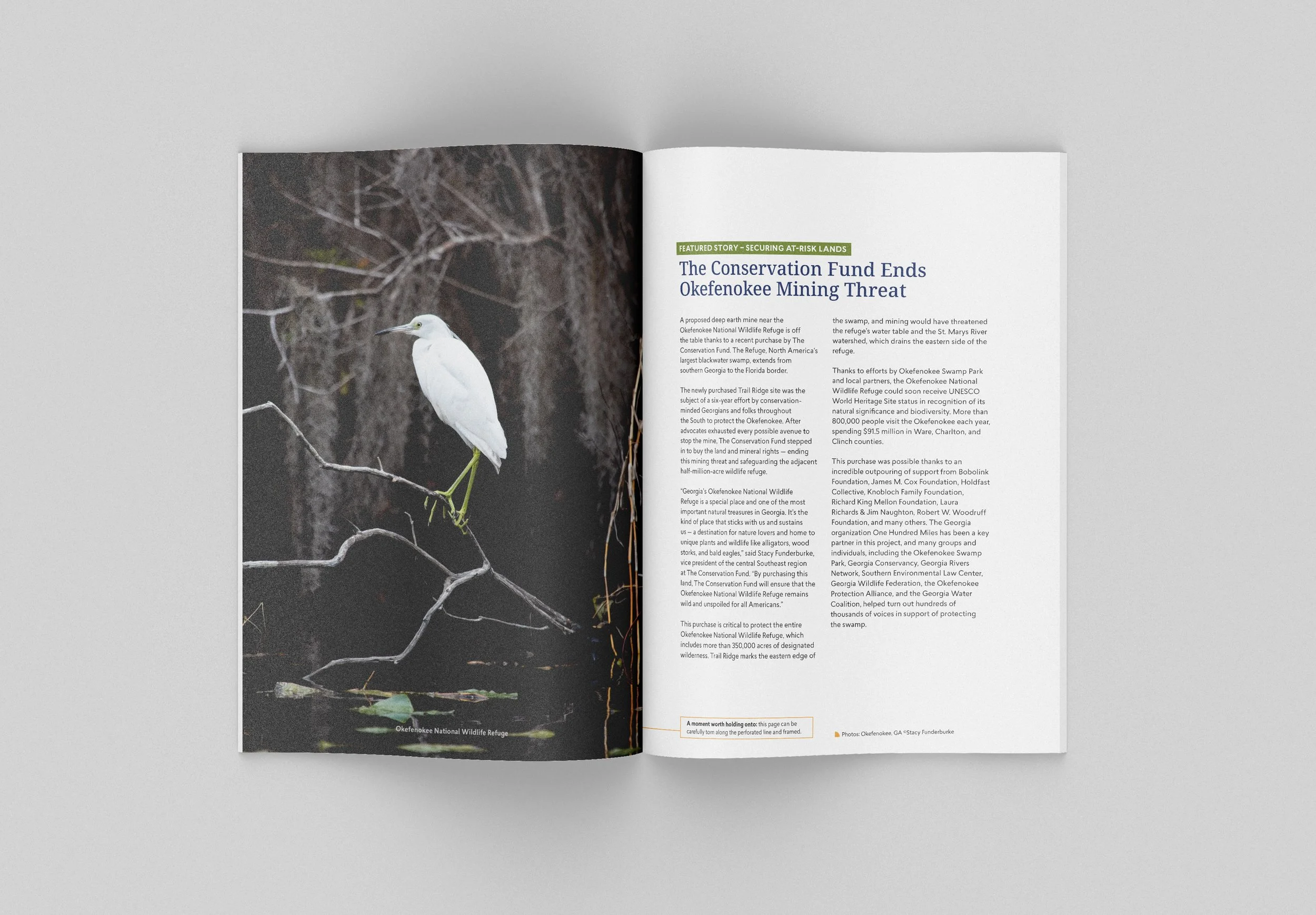
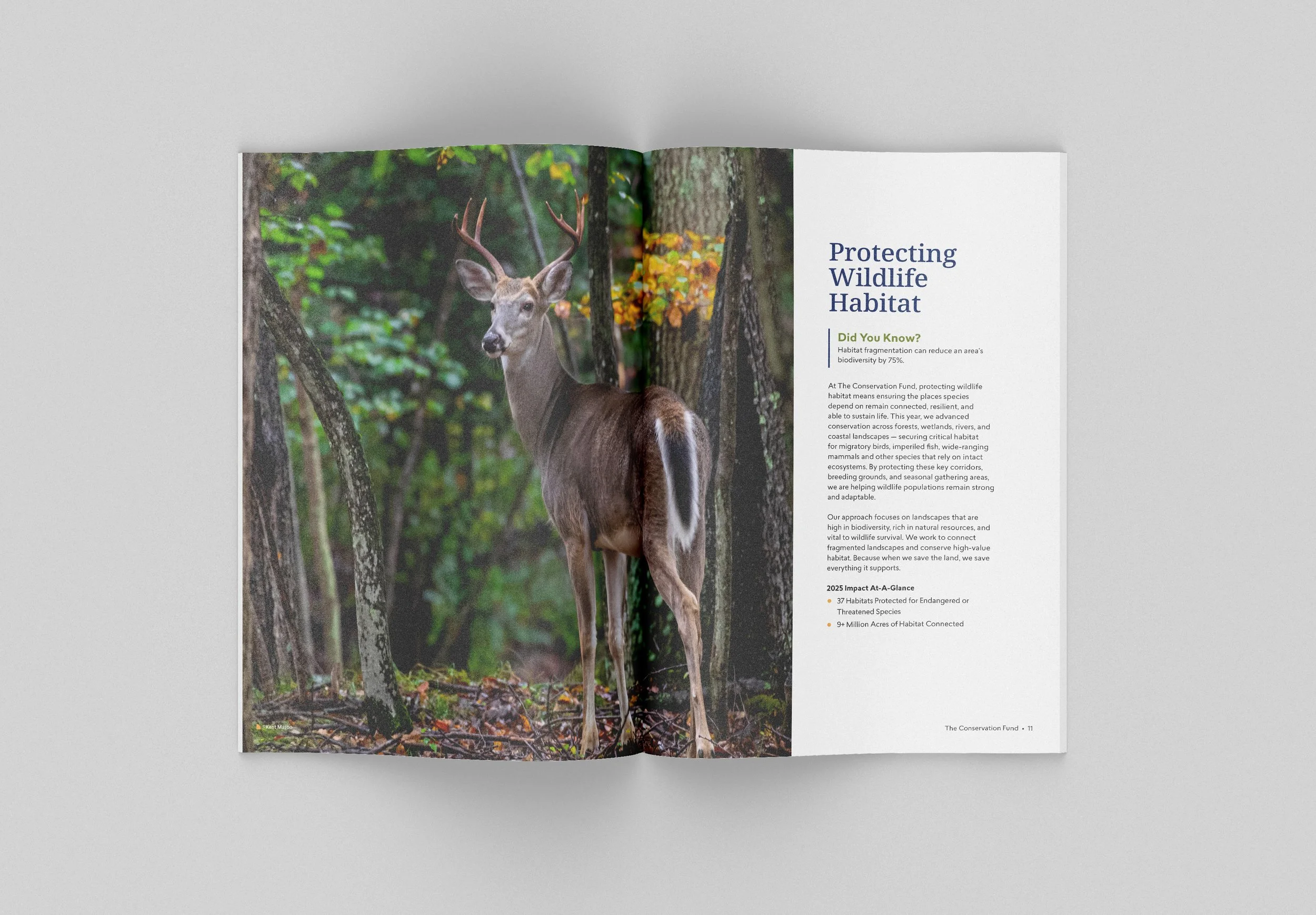
Annual Report
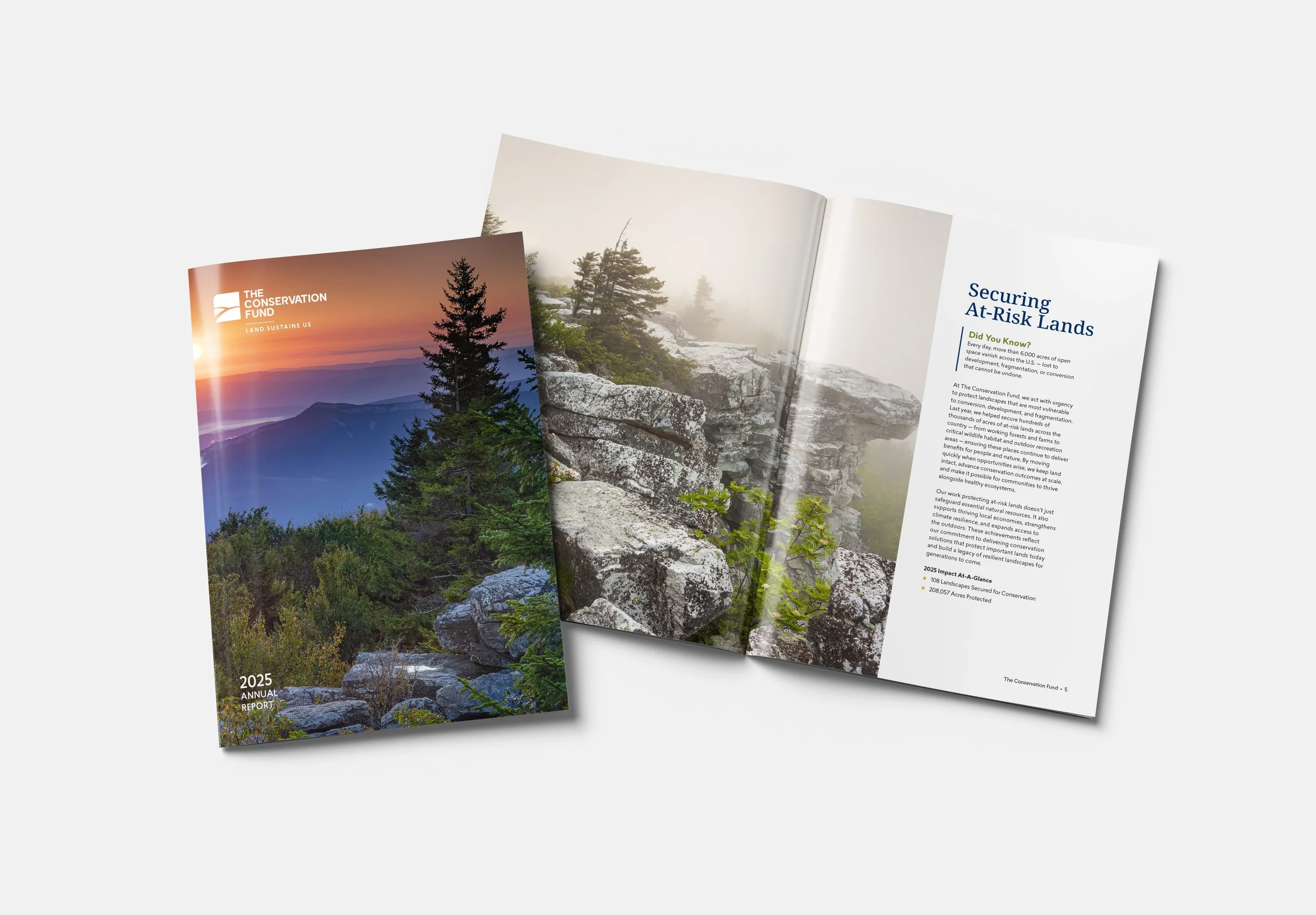
The Annual Report served as one of the first major applications of the new brand system.
I led the creative direction and production of the publication, using editorial design, photography, and storytelling to communicate organizational impact while demonstrating the flexibility and scalability of the new visual identity.
Photography & Video Storytelling
A significant component of the rebrand involved strengthening the organization's approach to visual storytelling.
I developed creative briefing frameworks and direction for photography and video projects, creating greater consistency across campaigns, fundraising efforts, and mission-driven storytelling. These standards helped ensure that visual content aligned with the broader brand strategy while highlighting the people, places, and landscapes central to The Conservation Fund's work.
Below is one example of this process in practice; the same framework guided storytelling across the broader rebrand.
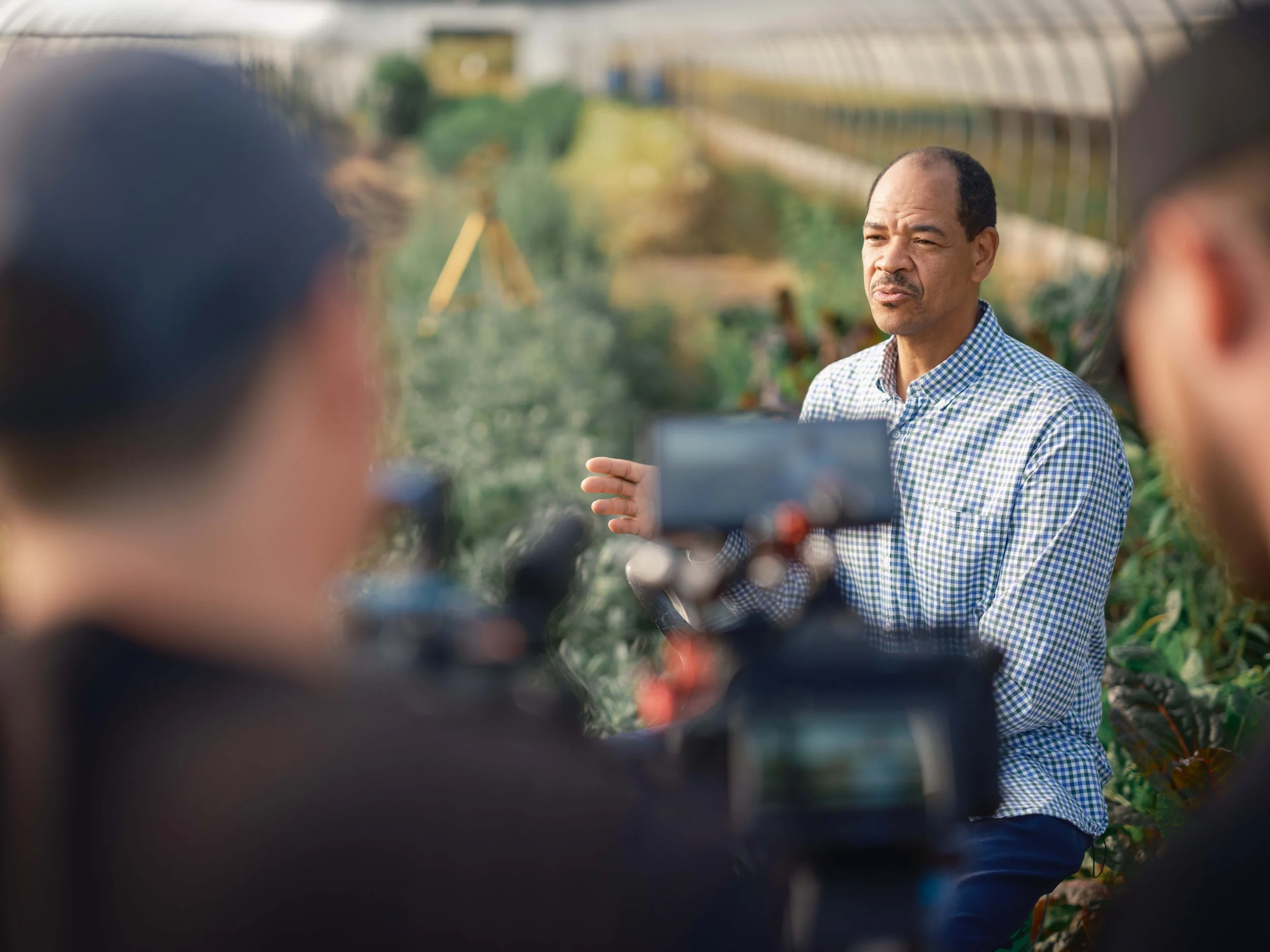
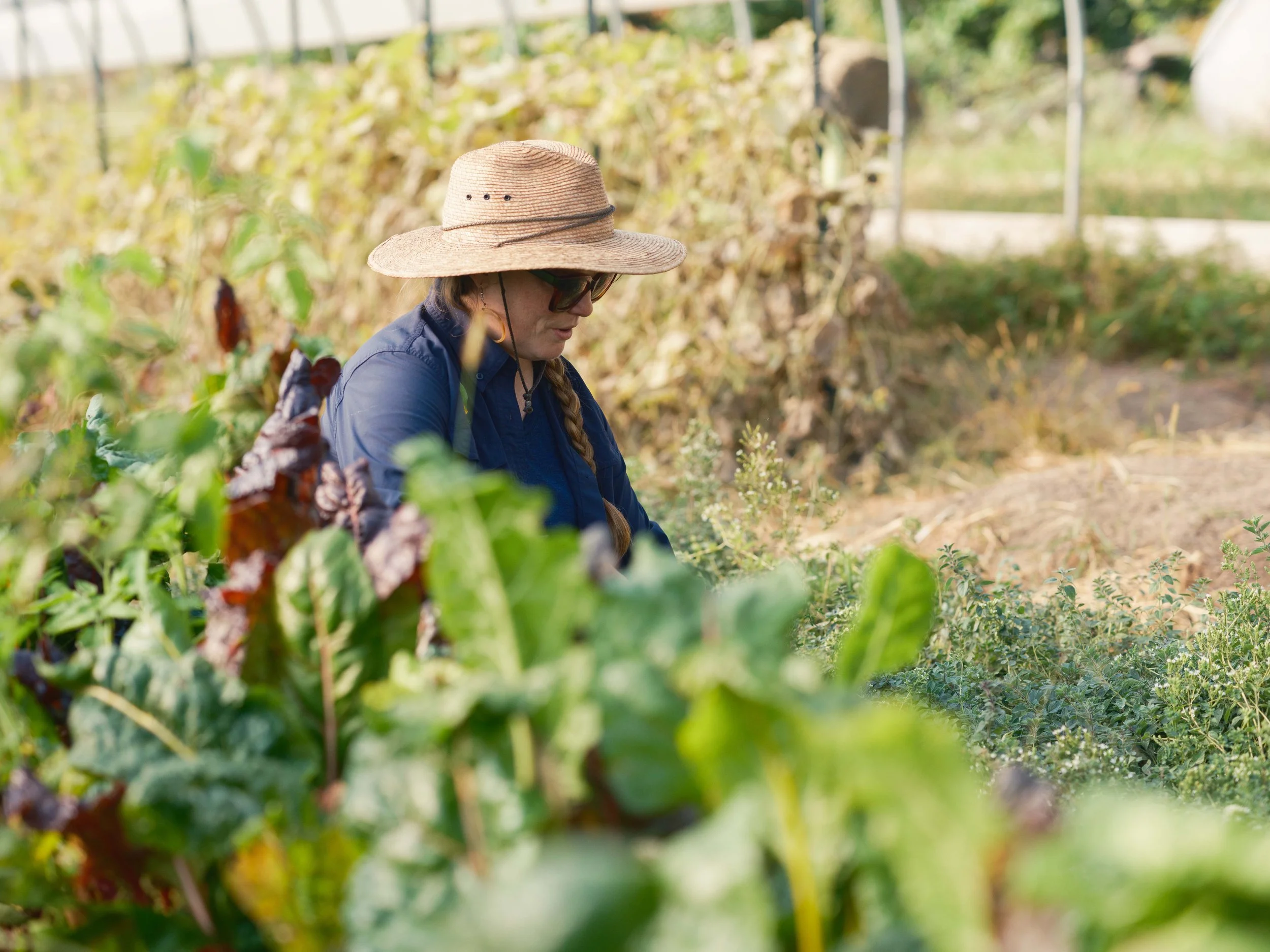
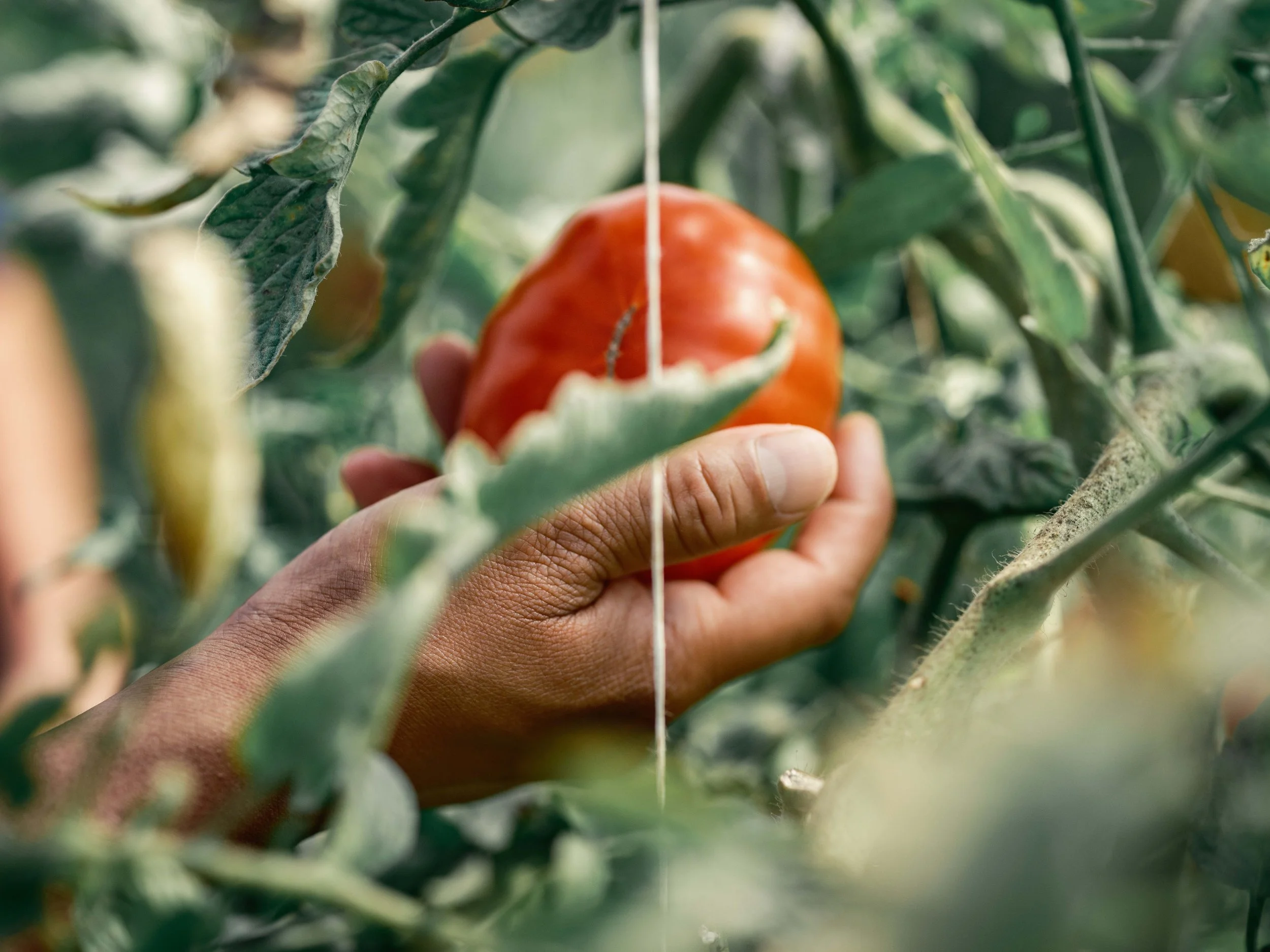
Chicago Farms Fund Audience: B2B/P
This was a collaborative effort with the Farms Fund program lead: together we developed the creative brief, interview questions, and narrative structure for this video, then I partnered with an external videographer to produce it. The goal was business-to-partner: raising awareness of the Farms Fund's work protecting threatened farmland in the Chicago metro area and building support to continue the great work.
I structured the story around three narrative pillars — affordable land ownership, next-generation farming, and community food access — and helped shape interview questions for the farmers and program partners featured, aimed at surfacing the personal stakes behind the program's work rather than just its statistics.





Brand Evolution
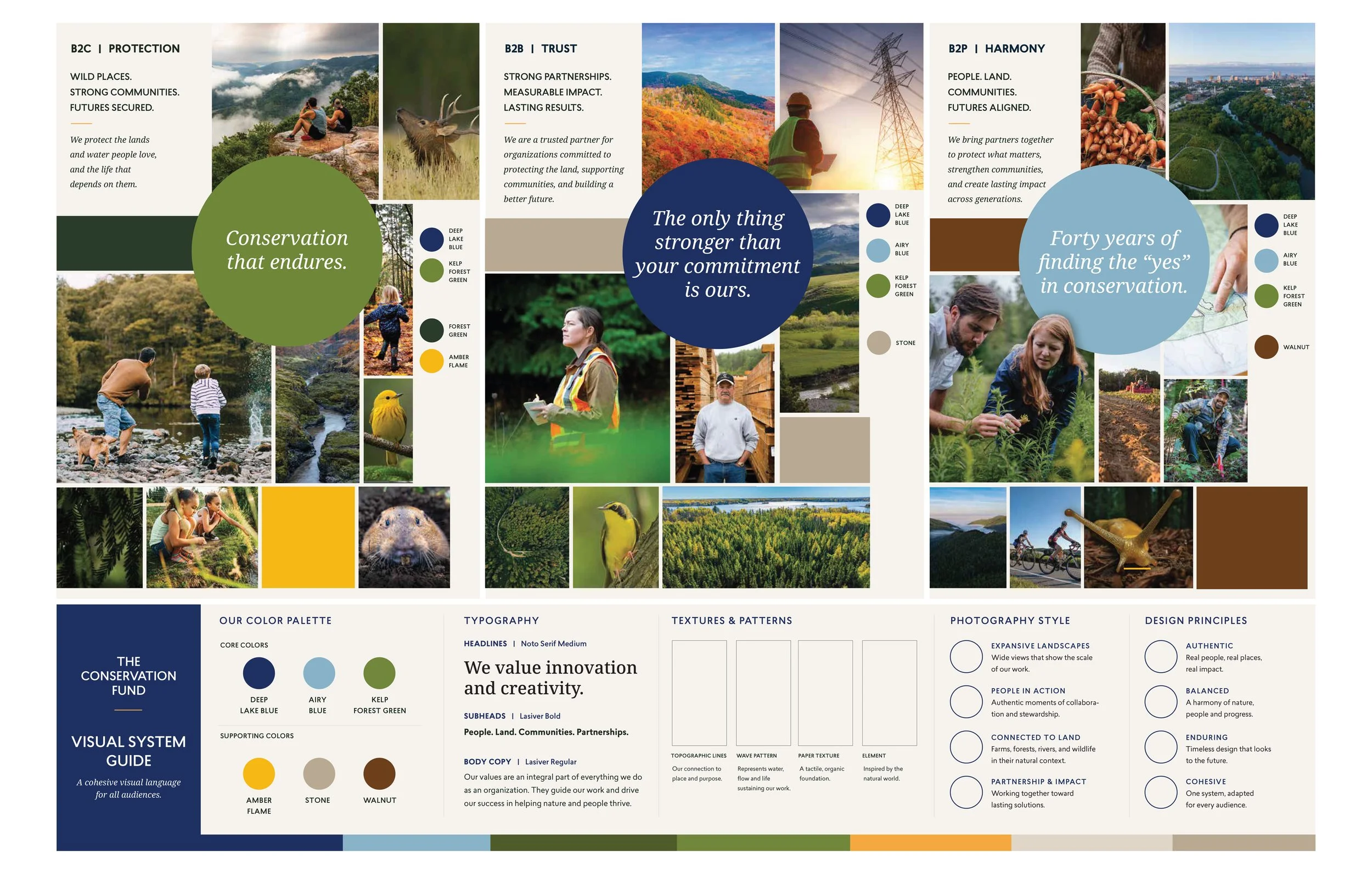
Building on the 2024 rebrand, I am currently leading the next phase of The Conservation Fund's brand evolution in partnership with an external brand consultant.
The initiative continues the 2024 mandate to raise visibility for the organization's conservation wins, sharpening a clear point of competitive differentiation: The Conservation Fund may not have the name recognition of some larger, more widely known conservation organizations, but it moves faster on protecting land than anyone else — and that speed is the story its audiences need to know.
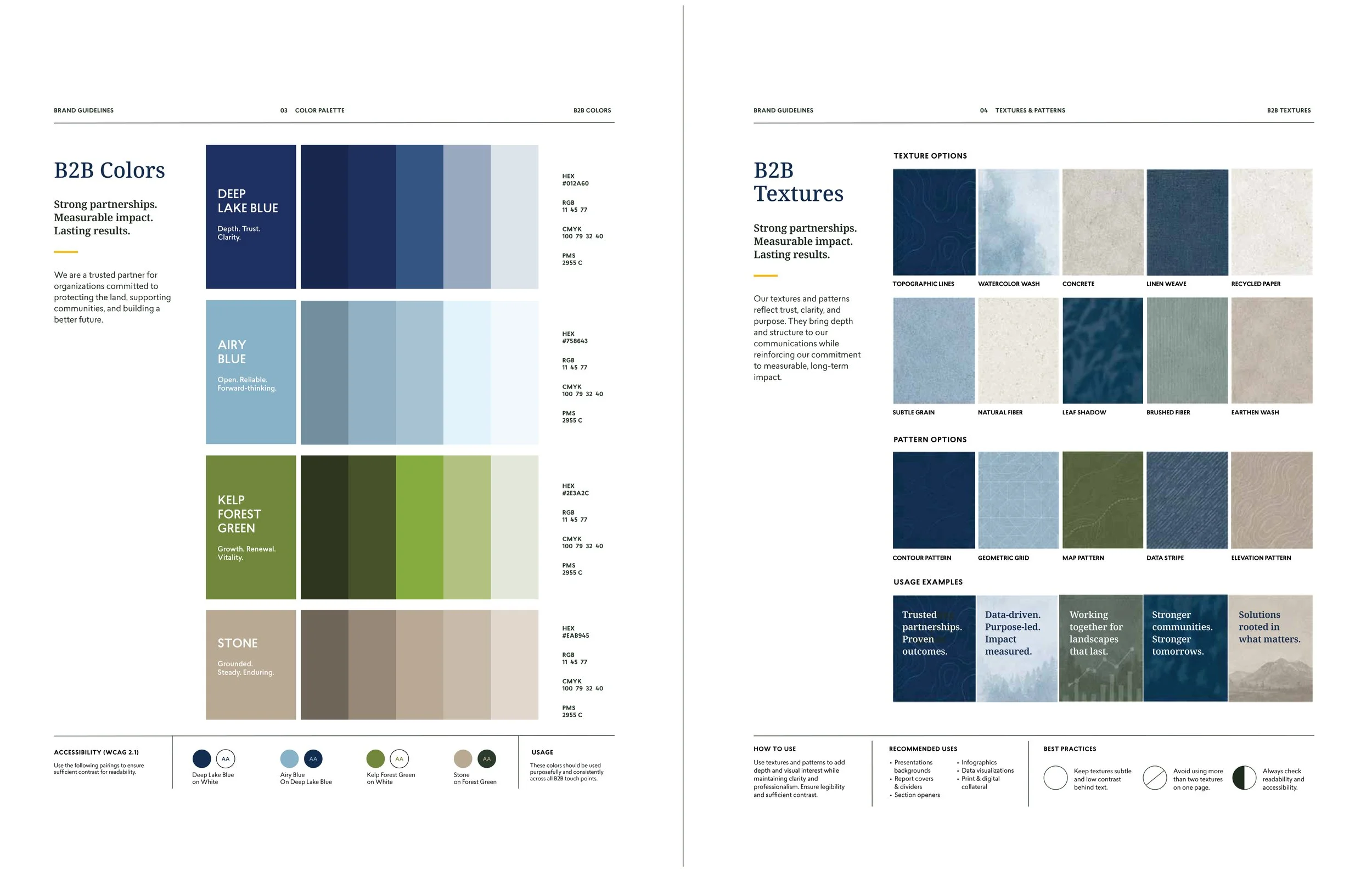
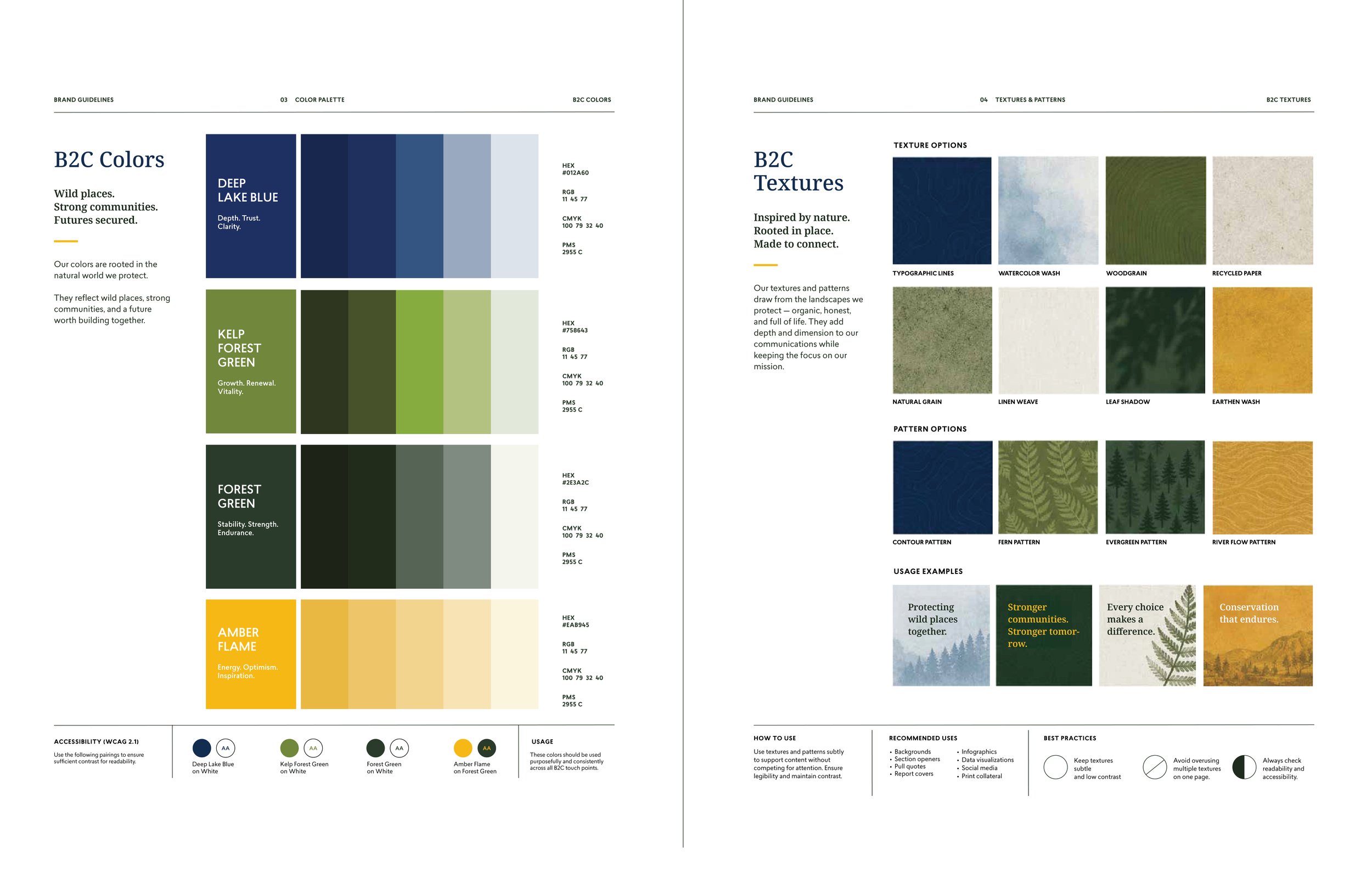
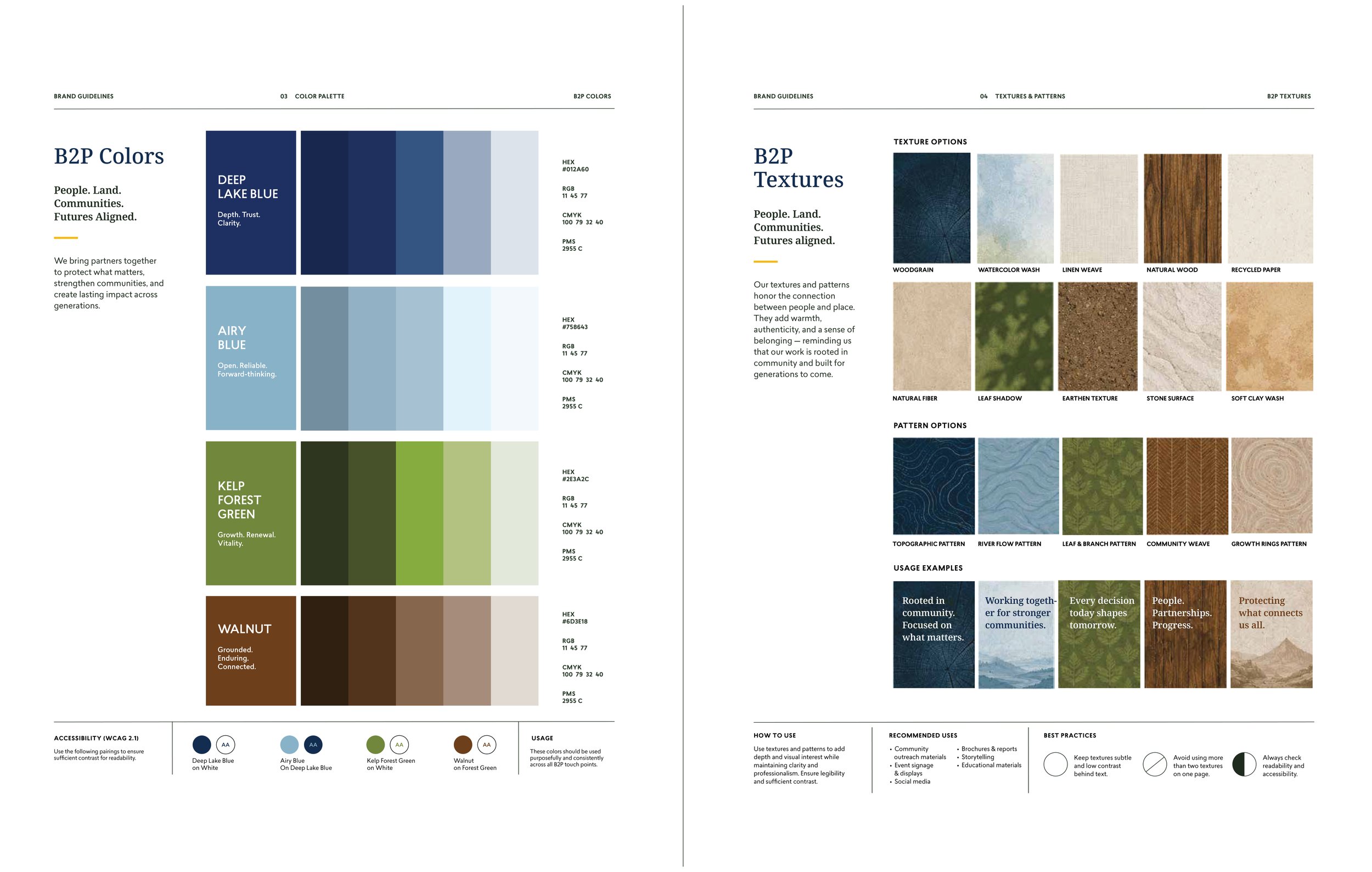
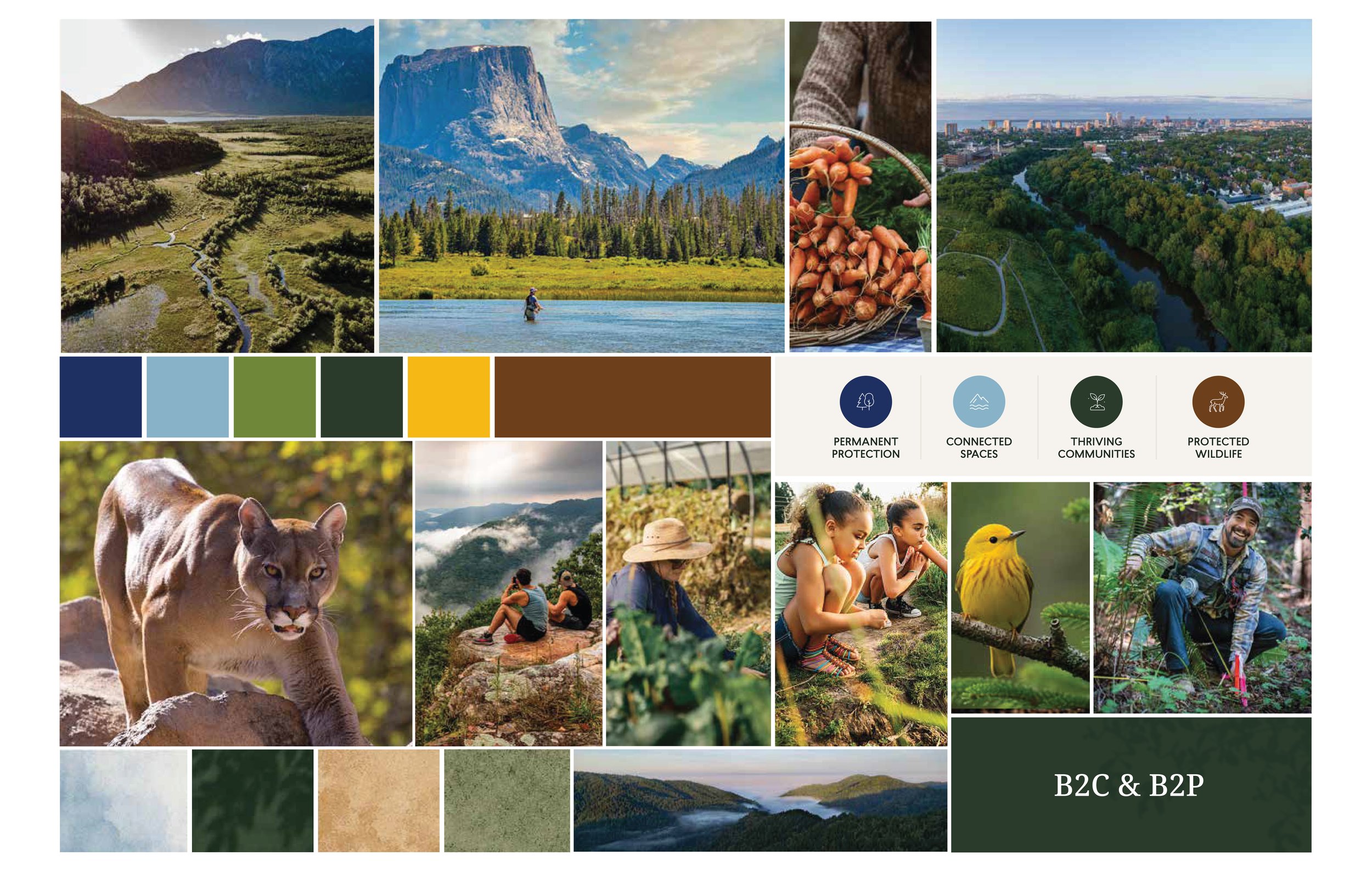
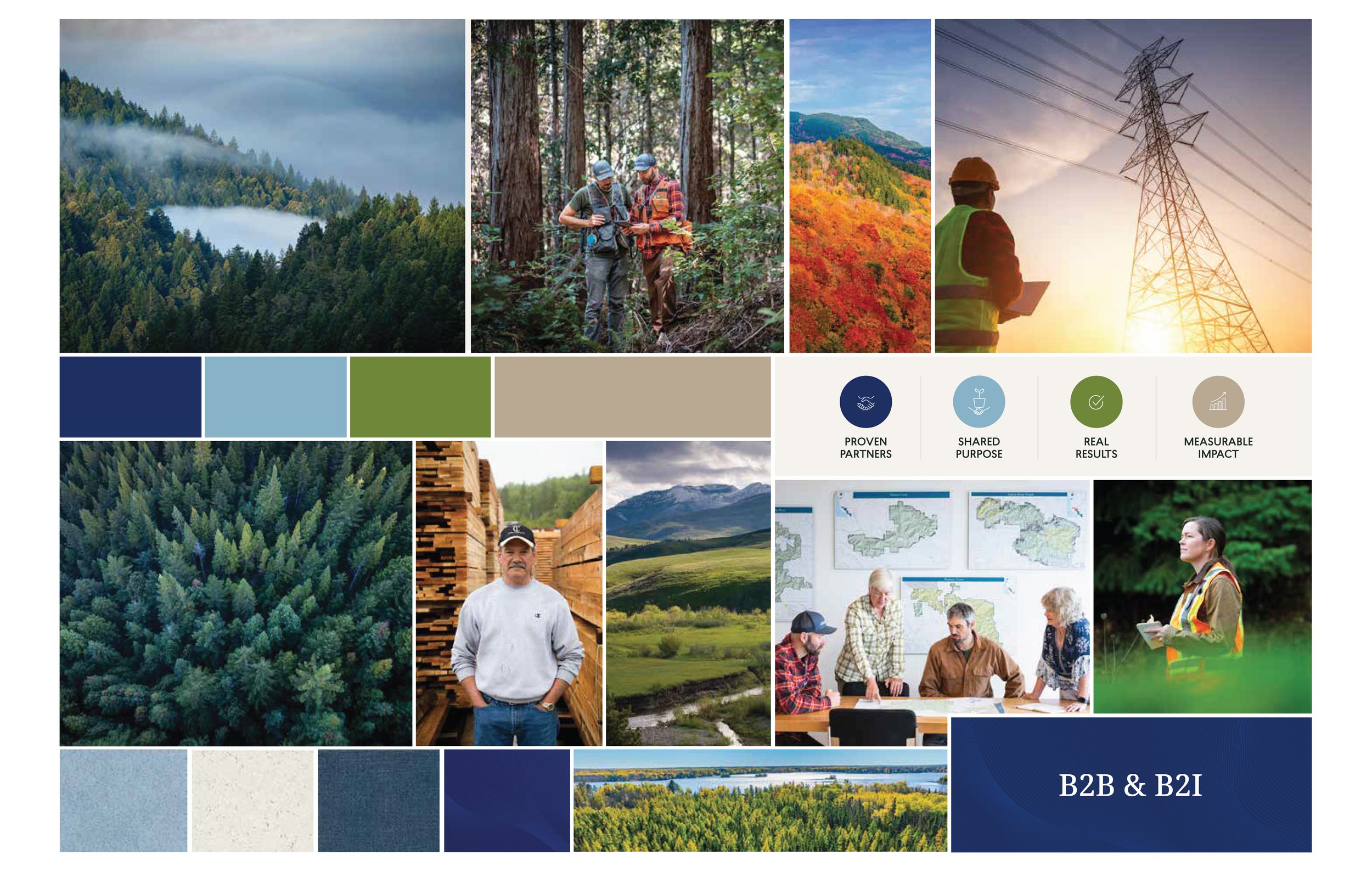
While the consultant develops the organization's messaging framework, I am leading the visual expression of the brand across four primary audiences: consumers, businesses, partners, and investors.
This work includes developing audience-specific visual systems that translate strategic messaging into distinct yet connected brand experiences across four frameworks — B2C, B2B, B2P (business-to-partner), and B2I (business-to-investor). Through the use of color, texture, imagery, typography, and layout, each audience receives a tailored visual experience while remaining aligned with the broader organizational identity.
I am implementing the framework across print, digital, and web communications to create greater clarity, consistency, and relevance for The Conservation Fund's diverse audiences.
Project Impact
The rebrand established a modern and scalable visual identity for The Conservation Fund, improving consistency across organizational communications and strengthening the organization's ability to communicate its mission through print, digital, photography, and video.
The response validated the investment: donors reached out directly to the strategic giving team to comment on the new brand, and the rebuilt website began functioning as a genuine public-facing platform — driving increased traffic from external donor and public audiences rather than serving primarily as an internal content library, as the previous site had.
Beyond the visual transformation, the work introduced creative processes, operational frameworks, and brand standards that improved collaboration, increased efficiency, and created a stronger foundation for future growth. Implementing Asana as the team's work management system cut project response times from roughly two days to one to two hours, and the annual report and fundraising campaign work I led contributed to year-over-year growth in donations.